



Unexpected Signs: My Path to a Gout Diagnosis

I honestly did not realize I had gout for years before I was diagnosed. Looking back, the signs were there. At the time, I had no idea what was happening.
My first ankle flare
The first time it showed up, my ankle felt sore and looked swollen. It was extremely tender to touch. I could not remember injuring it. Looking at it, I thought I must have sprained it. That felt like the only explanation. I carried on with my day, even though walking felt uncomfortable. It was not painful enough to do anything. A few days later, it went away on its own.
Another few weeks passed. I thought I had hurt my ankle again. I had no idea how, but it felt just like last time. This time, it was sore enough that I wondered if I had a fracture.
So, I went to the medical center. I walked around in a moon boot for a few days and rested. Eventually, the pain settled.

This cycle carried on 4 or 5 times. Each time, my ankle would swell and become tender. Walking was difficult. Sometimes the pain lasted 2 days. Other times, it lasted 2 weeks. Then, it would disappear. I never questioned it. I just thought I was unlucky or clumsy.
When the pain shifted
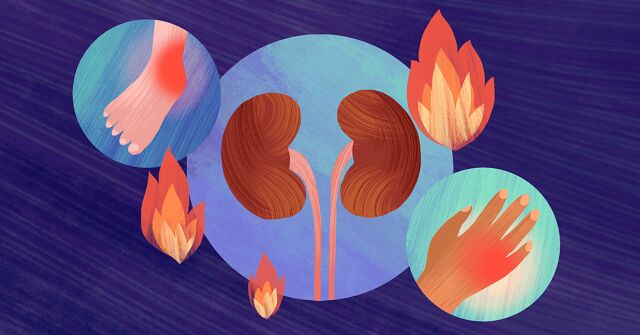
I started to think differently when the pain hit the ball of my foot. This time, it was on another level. The joint was red and swollen. It was so tender that even light pressure hurt. It was also hot to touch. It felt like it was radiating heat. Walking was not an option.
My dad took one look. He thought it might be gout. He also has gout. I remember thinking, isn’t that an old man’s disease? I never thought it could apply to me.
Getting a diagnosis
A few weeks later, I had an appointment with my specialist. I mentioned what had been happening. After a quick blood test, I was diagnosed with gout. My uric acid levels were through the roof!
Gout is not always obvious. This is especially true when it is mild. I had symptoms for years without realizing it. Many people think gout always causes sudden, severe pain. That is not always true.
Gout is common in people with chronic kidney disease (CKD). This is often called CKD. When kidney function slows, the kidneys struggle to remove uric acid. Uric acid can build up and form crystals in the joints. This causes gout.
Managing the condition
The good news is gout is treatable. A drug like allopurinol can help. Changes to food and reducing alcohol also lower the risk of flares. With the right plan, many people manage gout well.
Gout can be complex for people with kidney failure. As kidney function changes, drug doses need adjustment. During these changes, gout can flare again.
Pain relief is another challenge. Many people with CKD cannot take anti-inflammatory drugs. When a flare hits, options are limited. The pain can be intense. Resting with your leg up and ice is sometimes the only option.
Life after diagnosis
After my diagnosis, I reduced alcohol and changed my diet. I was willing to do anything to avoid that pain. I did have a few flares in the first 2 months while things settled.
Since then, things have been stable. I received my diagnosis in 2021. I have not had gout in over 5 years.
Gout is not for the weak. It is also an easily missed symptom of CKD. While it can be painful, it is treatable. If you notice joint pain, swelling, redness, or heat, talk to your doctor. Do not wait for it to get better on its own!
Join the conversation